ICO/ITO Scams

Initial Coin Offerings (“ICO”) and Initial Token Offerings(“ITO”) can be legitimate ways for crypto projects to raise funds — but they're also among the most commonly abused structures in fraud. Knowing how to evaluate them before investing can protect your money.

ICO/ITO Scams

What Is an ICO/ITO Scam?

An ICO (Initial Coin Offering) or ITO (Initial Token Offering) is a fundraising method where projects sell new coins or tokens to early investors. When legitimate, they can offer meaningful early access to promising technology. When fraudulent, they're designed from the start to take your money and disappear.

The pattern is familiar: a project launches with heavy promotion, bold promises of revolutionary technology, and claims of massive returns. Investors send funds. The founders vanish — leaving investors with worthless tokens and no recourse.
 

Types of ICO/ITO Scams

Rug Pulls — Developers build enough hype to attract investment, then abandon the project and disappear with the funds.

Fake Whitepapers — A professional-looking document is created to give the project credibility, but the technology, team, or use case doesn't exist.

Plagiarised Projects — Scammers copy the branding or whitepaper of a legitimate project to appear credible.

Anonymous or Fake Teams — Founders use fake identities, stock photos, or stolen credentials.

Malicious Smart Contracts — The project's underlying code contains hidden functions allowing developers to drain investor funds at any time.

Pump and Abandon — Early investors and developers inflate the token price before selling their holdings and leaving new investors with worthless assets.

Red Flags

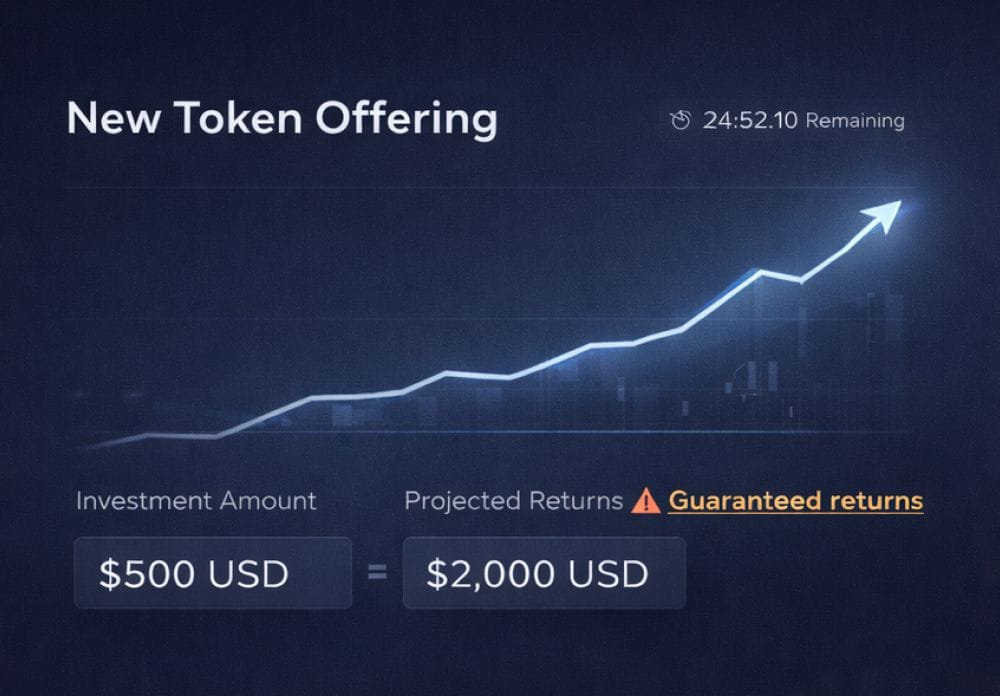
  • Promises of guaranteed or unusually high returns with little explanation of how they'll be generated
  • A whitepaper that's vague, overly technical without substance, or hard to find
  • An anonymous team with no verifiable identities, LinkedIn profiles, or public track record
  • No clear use case for the token beyond generating investment
  • Pressure to invest before a deadline or before the price increases
  • No third-party audit of the smart contract
  • Social media channels that are brand new, have low engagement, or appear bot-driven
  • No legal structure, registered entity, or regulatory compliance information

Example: A DeFi project launches with a slick website, a detailed whitepaper, and a highly active Telegram community. Early investors see rapid price growth and share returns publicly, attracting more. Once enough funds are raised, the developers drain the liquidity pool overnight. The token becomes worthless within hours.

What to Check Before Investing

The team — Can you verify the founders' identities independently? Do they have a credible track record?

The whitepaper — Does it clearly explain the technology, the use case, and how funds will be used?

The smart contract — Has the code been independently audited by a reputable firm?

The legal structure — Is the project registered with a regulatory body and compliant with securities law?

The community — Is engagement organic, or does it appear artificially inflated?

Independent reviews — What are credible sources outside the project's own channels saying?

How to Protect Yourself

  • Never invest more than you can afford to lose
  • Do your own research — don't rely solely on the project's own materials
  • Be sceptical of guaranteed large returns; no legitimate investment can promise them
  • Verify the team independently through LinkedIn, GitHub, or professional channels
  • Check for audits from reputable third-party security firms before investing
  • Only use registered platforms to participate in token offerings where possible

Received a Suspicious ICO/ITO Offer?

Don't send any funds or share personal information. Research the project independently and report it to help protect other potential investors. Contact Ndax support if the offer appeared to come through or be associated with Ndax.

Think You Invested in a Scam Project?

Stop sending funds immediately — even if you are told more investment will recover your losses, unlock withdrawals, or protect your original deposit.

Document everything: transaction records, wallet addresses, communications, website URLs, whitepapers, promotional materials, social media posts, and the names or profiles of anyone involved. Do not engage with anyone offering to recover your funds for a fee; this is almost always a second scam.

If you transferred crypto from your Ndax account, contact [email protected] right away. Cryptocurrency transfers are generally irreversible, but the information you provide may help us review the activity and protect other users.

If fiat funds, bank transfers, credit cards, debit cards, or payment services were used, notify the financial institution where the funds originated.
 

How to Report

  • Report to Ndax at [email protected] if your Ndax account was involved or crypto was transferred from your Ndax account
  • Report to the CAFC at antifraudcentre.ca
  • Report to the RCMP at reportcyberandfraud.canada.ca
  • Notify the financial institution where the funds originated, such as your bank, card provider, or payment service provider
  • Report fake profiles directly through the relevant social media, messaging, or dating platform

Don't forget to follow us on social media for more updates and join the conversation on our forums.

Disclaimer: This article is not intended to provide investment, legal, accounting, tax or any other advice and should not be relied on in that or any other regard. The information contained herein is for information purposes only and is not to be construed as an offer or solicitation for the sale or purchase of cryptocurrencies or otherwise.