Ndax: A Canadian crypto platform with tools beyond a first purchase
Learn how Ndax can support different crypto workflows, from a first purchase to more advanced trading, staking, reporting, and larger transactions, from a first purchase to more advanced trading, staking, reporting, and larger crypto transactions.
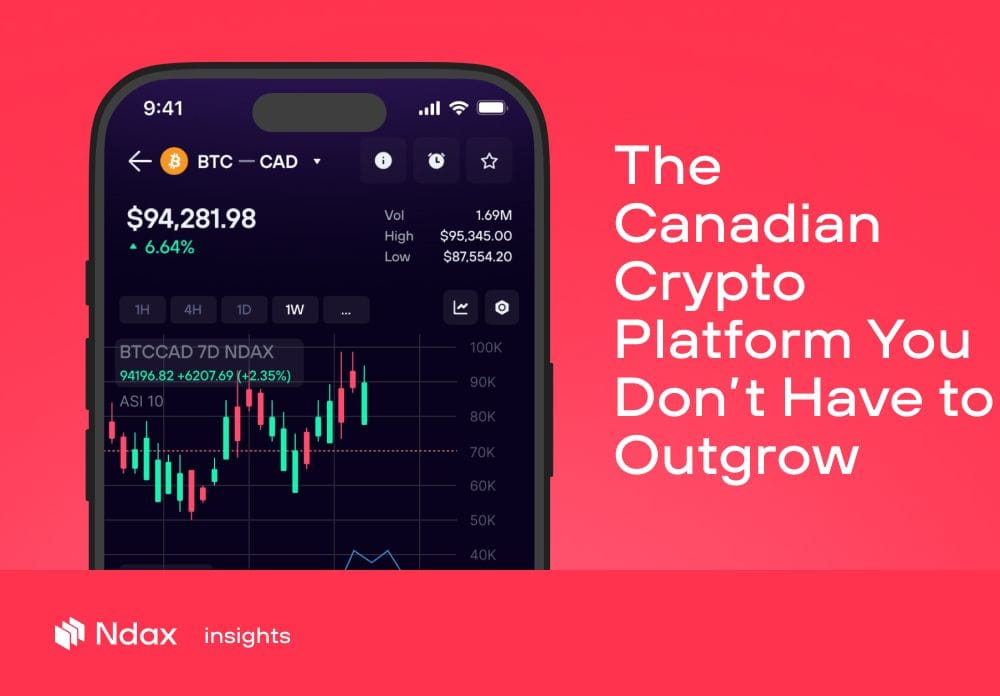
Key takeaways
- A crypto platform should be evaluated by whether it can support users over time as their needs expand.
- Ndax may be considered by Canadians who want a platform that can support simple trading, more advanced order types, staking, reporting, withdrawals, and larger transactions.
- For some new users, a focused interface may feel simpler. However, users may value having room to grow without needing to move to another platform later.
Introduction
Some crypto platforms are built specifically for a first purchase. Others are built for professional traders. Ndax offers features that can support both basic transactions and more advanced platform workflows. A Canadian user on Ndax can start with a simple buy or sell order, then access additional features over time. This may include CAD trading pairs, advanced order types, staking for supported assets, charting tools, recurring buys, API access, and larger-trade services through Ndax Wealth.
Ndax is a regulated crypto trading platform. Ndax provides an Order Execution Only service. Ndax executes clients’ instructions but does not provide investment advice. Clients decide when and what to trade.
Why outgrowing a crypto platform happens
Some platforms market crypto to Canadians in a simple way: an easy interface to buy a very small handful of assets, such as Bitcoin, Ethereum, and USDC. For many new users, this is ideal because the platform decision is basic and suits basic needs.
But user needs can change quickly. A user who starts with one, two, or three assets may later want to compare many other assets. A user who starts with a market order may later want to set a limit price. A user who simply holds crypto may later want to withdraw to an external wallet, stake eligible assets, review transaction records, or place larger trades.
That is where some platforms start to feel inadequate. A beginner-only experience is certainly useful at the beginning, but users may eventually want more features and better control over their funds. They may want more assets, more order types, more market context, clearer fees, staking, or larger-balance support. The platform that feels simple at first should not become a constraint later.
Starting with basic buying and selling
The first stage requires simple access. A user needs to fund an account, understand the cost, choose an asset, and place a trade. Users should be able to see how fees work, understand how deposits and withdrawals are handled, and confirm what they are buying before placing an order.
Ndax uses a flat trading fee model at 0.20%, along with free Canadian-dollar deposits. Users should still consider withdrawal fees, crypto network fees, and any asset-specific costs before placing a trade or withdrawing assets.
This structure can help users understand one important part of the cost before they trade. It also gives users access to Canadian-dollar funding and CAD trading pairs, which can matter for Canadians who want to trade without converting through another currency first.
Scaling into more trading control
As users become more comfortable, they may want more control over how their orders are placed. A market order is often used for straightforward buying or selling, while a limit order lets users set a limit price. As a user’s needs evolve, they may want to place limit orders at specific prices.
These users may want to use stop orders or stop-limit orders to plan around price movement. More advanced users may want trailing stop orders, fill-or-kill orders, charting tools, indicators, or order-book information.
Ndax supports this kind of progression. Users can begin with basic buying and selling, then use more detailed trading tools if their needs change. This does not mean every user should use advanced order types. It means the platform can support users who want to learn them over time.
A platform does not need to force complexity on beginners to be useful for advanced users. It can offer a simple starting point and more depth for users who want it.
Staking supported assets
Some users move beyond buying and selling and begin asking whether eligible crypto assets can be staked.
Staking allows users to earn rewards on supported proof-of-stake assets, although rewards are not guaranteed and staking carries risk. Users should understand the reward rate, platform fee, payout schedule, bonding period, unbonding period, validator risk, asset price volatility, and protocol-specific conditions before staking.
Ndax offers staking for supported crypto assets and provides a calculator to estimate expected rewards. Ndax applies a 20% administration fee to rewards generated through staking, and the fee is deducted from rewards, not from the assets staked.
For users who want staking, the question is not simply which platform shows the highest rate. The better question is whether the platform clearly explains how staking works, which assets are supported, what fees apply, and what risks are involved.
Tracking, reporting, and managing activity
Platform tools and records may become more important as account activity grows. Someone who buys once may only need a basic confirmation. Someone who trades more often may need clearer transaction history, account statements, records, and reporting tools. Users may also need to understand deposits, withdrawals, transfers, staking rewards, and other account activity for their own records and tax reporting.
This is one reason a platform should be judged by more than its sign-up flow. As crypto becomes a larger part of a user’s financial life, account management matters more. Users should know where to find records, how to review transaction details, how to track balances, and how to access support when something needs attention.
Ndax is built to support more than a one-time purchase. As users add trades, deposits, withdrawals, staking activity, and larger transactions, they can manage more of that activity within the same Canadian platform instead of moving between separate tools or providers.
Executing larger transactions
Many new users may eventually need access to something greater than a standard retail trading platform. This may be due to larger crypto transactions, which require more planning around price, liquidity, timing, settlement, and execution. A user placing a larger order may not want to rely on the same process used for smaller purchases.
Ndax Wealth is designed for larger crypto transactions and OTC execution. It may be relevant for users who want dedicated support, deeper liquidity access, and a more structured process for larger trades.
This does not apply to every user. Many users will never need OTC execution. But what matters is that the platform can support those who do.
Bottom line
The best crypto platform for a first purchase is not always the platform a user wants to stay with over time. Canadians comparing platforms should think about both the starting point and the next step.
Can the platform support a simple buy or sell order? Can it support CAD funding? Are fees clear? Are supported assets available? Can users withdraw crypto? Are there tools for more advanced trading? Is staking available for supported assets? Are records and account details accessible? Is there support for larger transactions?
Ndax is built around that broader path. Users can start with basic self-directed trading, then access more tools as their needs become more advanced. They can trade, stake supported assets, review account records, withdraw supported crypto, and use Ndax Wealth for larger transactions.
That is what it means to use a Canadian crypto platform you do not have to outgrow.
Don't forget to follow us on social media for more updates and join the conversation on our forums.
Disclaimer: This article is not intended to provide investment, legal, accounting, tax or any other advice and should not be relied on in that or any other regard. The information contained herein is for information purposes only and is not to be construed as an offer or solicitation for the sale or purchase of cryptocurrencies or otherwise.