Ndax Wealth: Market Report Nov 3
Every other week, we break down the cross-asset landscape, from crypto to equities to commodities, so you can stay ahead of the macro trends shaping global markets. Here’s your snapshot of what mattered, why it moved, and what to watch next.
Desk View
Crypto
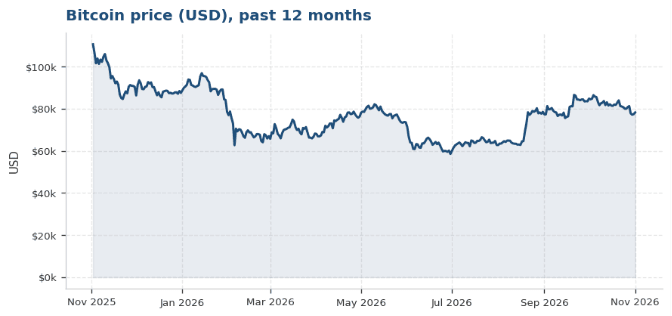
A $ 6 billion shock: Bitcoin enters November near $76,750 USD following a turbulent close to October. Binance reported a significant security incident with estimated losses near $6 billion USD, reportedly originating from compromised internal access rather than a vulnerability in the underlying blockchain networks. Binance has stated it will cover affected customer assets, with approximately $3 billion USD of the stolen funds reportedly frozen. The disruption coincided with Bitcoin failing below $77,000 USD and to approximately $1.5 billion USD in market-wide liquidations. U.S. spot Bitcoin ETFs recorded roughly $202 million USD in net outflows for the week, including approximately $643 million USD on Friday alone.
Altcoin performance was uneven. Ethereum, Solana and XRP declined alongside Bitcoin, with Solana particularly weak. Hyperliquid's HYPE token advanced following report that Intercontinental Exchange, the parent company of the New York Stock Exchange, is pursuing a partnership to introduce Hyperliquid-based perpetual futures to U.S. markets, subject to regulatory approval. The divergence may illustrate how infrastructure developments and token-specific catalysts can produce differentiated performance during broader market weakness.
Dispersion widens: CoinGlass's Altcoin Season Index retreated to approximately 52, while the Crypto Fear and Greed Index moved into fear territory. Exchange withdrawal activity, asset recovery efforts and institutional fund flows may provide additional indicators of market confidence. Friday's U.S. and Canadian employment reports may provide an additional test of broader risk sentiment.
Macro
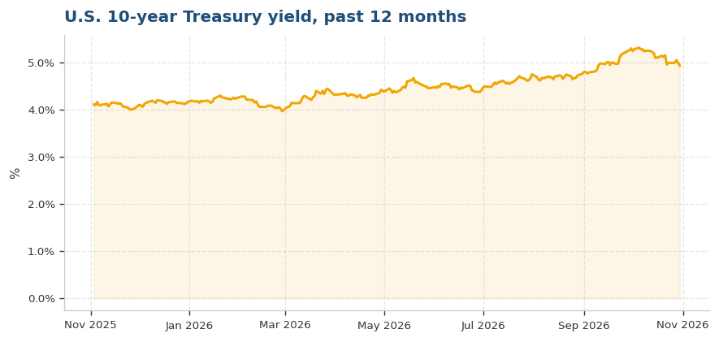
A split hold: The Federal Reserve held its benchmark interest-rate range at 3.75% to 4.00% on October 28, with two policymakers voting in favour of a 25-basis-point increase. U.S. third-quarter GDP expanded at an annualized rate of 3.4%, while September's PCE inflation accelerated to 3.6% year-over-year, with core inflation at 3.1%. Economic activity remains robust despite elevated borrowing costs, even as underlying inflation continues to challenge the Federal Reserve's price-stability objectives. In Canada, the Bank of Canada raised its policy rate by 25 basis points to 2.50%.
A packed calendar: The coming week brings a concentrated calendar. U.S. midterm elections on Tuesday may have potential implications for fiscal priorities, regulation and government spending, while monetary-policy decisions from the Reserve Bank of Australia and Bank of England may offer further perspective on international inflation pressures. The biggest releases arrive Friday, November 6, when the U.S. publishes October nonfarm payrolls and Canada releases its latest employment figures. U.S. payroll growth is expected to remain modest following September's increase of 29,000 jobs, while Canadian employment is forecast to recover partially after a reported decline of approximately 68,000 positions in September.
Equities
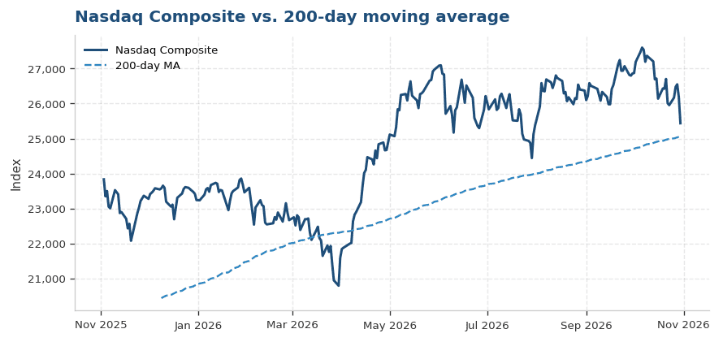
October under pressure: U.S. equity markets ended October under pressure as investors increasingly questioned the financial returns associated with substantial AI infrastructure investment. During the final week of the month, the S&P 500 declined approximately 0.6%, the Nasdaq Composite fell roughly 2.0%, and the Dow retreated approximately 0.9%.Friday's session drove much of the weakness, with the Nasdaq declining approximately 2.9%. Amazon's cloud business demonstrated robust growth, yet elevated capital spending raised questions about near-term free-cash-flow generation, while Intel declined sharply following weaker forward guidance.
Beneath the headline indices, market performance has been considerably more differentiated. While the capitalization-weighted S&P 500 declined during October, the equal-weight S&P 500 advanced, suggesting that weakness among a small group of large technology companies may has obscured stronger performance elsewhere. Healthcare and other less technology-dependent sectors demonstrated relative resilience. The coming week brings further earnings, including Apple and Palantir, alongside Tuesday's midterm elections and Friday's employment reports.
Fixed Income, FX & Commodities
Headlines Worth Noting
OTC Desk, Let's Talk
Don't forget to follow us on social media for more updates and join the conversation on our forums.
Disclaimer: This article is not intended to provide investment, legal, accounting, tax or any other advice and should not be relied on in that or any other regard. The information contained herein is for information purposes only and is not to be construed as an offer or solicitation for the sale or purchase of cryptocurrencies or otherwise.